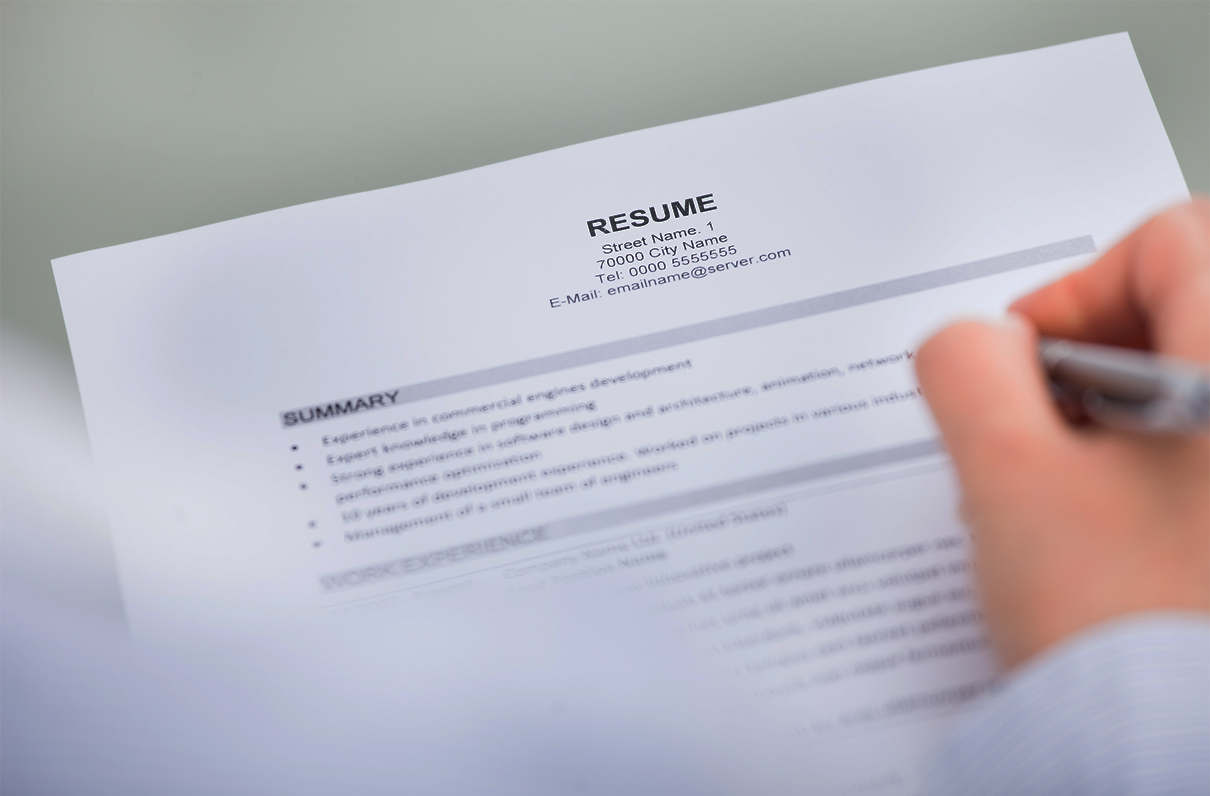
Birthdate, Not Birthday And Other Correct Phrasings To Use On Resumes

Most resumes and CVs are written in the global language of English, so we should be particularly mindful of the correct grammar as well as the nuances of the language when we are making them. Here are some tips on phrasings and grammar in general.

Image_1_1.jpg
Image source: moaa.org

Firstly, as mentioned in the title, don’t jot down “birthday” when referring to your background information. The hiring professional looking at your resume is not looking for the day of the week you were born. Either say “birthdate” or “date of birth.”

Avoid the expression “responsible for,” as in “responsible for IT programs in my previous work.” It comes across as vague and weak; use action verbs instead, like “improved,” or “developed” and couple them with needed specifics. For example, “developed IT software in previous work in (specify company).”

Be especially careful with spelling. Any misspelled word can make the evaluator of your resume think that you wrote it carelessly or that you didn’t put in the effort to check for grammar, which ultimately leads to a negative first image. Homonyms like “lose” and “loose” or the contracted “it’s” versus the possessive “its” should be clearly distinguished.

Slide1.png
Image source: internshala.com

Other words and phrases that should be avoided are “results-oriented,” “proven ability,” and the generic and anemic verb “had.” Be clear and concise; present information in specifics without sacrificing brevity.

Hello, my name’s Larry Polhill from Arizona. I’m a retired career consultant offering insights on how jobseekers can land their dream job. For more on my work and interests, check out this page.

 

Choosing Which Font To Use For Your Resume

In writing a resume, content should be prioritized, although it does not mean that the format or style should be overlooked. A resume that does not appear professional, or at least presentable, may deter hiring managers or human resource personnel from taking a closer look at the content. And with automated applicant management systems becoming more prevalent today, creating a resume that is easy to read becomes more important.

Choosing the appropriate font is essential in ensuring the resume creates a good first impression. Here are some tips on how to do that:

Image source: workandmoney.com

Use a proper font type: No single rule dictates what font should be used, as long as it is readable. Basic book print fonts, such as Arial, Times New Roman, Calibri, and the like are recommended. Cursive, calligraphy, and freestyle fonts are discouraged, unless, the position being applied for is in graphic design, fine arts, or advertising.

Select an appropriate font size: A font size that is between 10 to 14, depending on the font type, is suggested. The job applicant should just make sure that it is not too small that it can cause eye strain or scanning hiccups.

Image source: canva.com

Be consistent: The most important thing to remember is to be consistent in the formatting of the resume. Remember that a single font type should be used. As for the size, it should also be consistent, but the headers’ size may be increased for emphasis.

Larry Polhill here, previously a career consultant but have already recently retired. I share tips on writing resumes and job interviews, which you can read by visiting my blog.

Do You Really Have To ‘Tailor Your Resume’?

You might have heard this advice before: tailor your resume to make sure that your credentials, skills, and accomplishments will stand out in the eyes of hiring managers. As the workforce continues to grow, so do job applications, leaving little time for hiring managers or human resources heads to go through every resume in detail. As a matter of fact, it is estimated that they spend an average of ten seconds in skimming each resume.

resume-writing
Image Source: buzz2fone.com

It is a misconception, however, that you have to rewrite a new, complete resume for every position that will be applied for. That would take too much time, and there is the increased likelihood of typographical errors. Some minor editing would suffice and do the job.

To get it started, it is important to read the job description thoroughly to understand what the company wants and requires from the position. In addition to this, make sure to look for the keywords that will capture the attention of those who would be reading the resume.

The skills and experiences relevant to the company and the position should also be given emphasis. The bullets can be revamped to highlight the items that the hiring manager would most probably be looking for. It is recommended to place the important details at the top half of the page.

resume_review
Image Source: lawrence.edu

Larry Polhill here, a retired career consultant. If you want to learn more about the best practices of writing a resume, visit this blog.

How To Dress For That Crucial Interview

Even before you utter your first word during an interview, the way you are dressed would have already made a big impression on your interviewer. While the dress code for companies varies, don’t assume that the formality of the encounter can be done away with.

Image source: gesg.ph

Again, whether it’s a casual or formal interview, it’s the occasion that’s formal. Wearing an informal attire might make your interviewer feel that you are not that serious about getting the job. So, dress up appropriately.

By “appropriately,” we mean professionally. For men, the standard is to wear a suit. Never dress down for your interview even if the regular dress code allows for casual wear. Remember that you are not yet in the company, so be conservative.

For men, a comfortable, dark-colored suit paired with a light-colored shirt is the best option. Don’t wear jeans or sneakers as that makes for a rugged look that can be likewise seen as unprofessional. Stick with slacks and dress shoes and coordinate accordingly. Don’t wear a loud or gaudy tie as that will draw unnecessary attention. Finally, make sure that the clothes are neat, clean, and pressed.

Image source: pinterest.com

Women should generally wear a suit with a skirt or pants and pair these with a conservative blouse. Keep it simple and use dark colors, with minimal or no prints. Make sure that your attire is comfortable and, if you opt for a skirt, that it’s not too short, loud, and tight. Lastly, your make-up and nail polish should be understated and your jewelry minimal.

Larry Polhill is a retired career consultant based in Arizona. He believes that resumes could make or break one’s chances when applying for a job. More career tips and advice here.